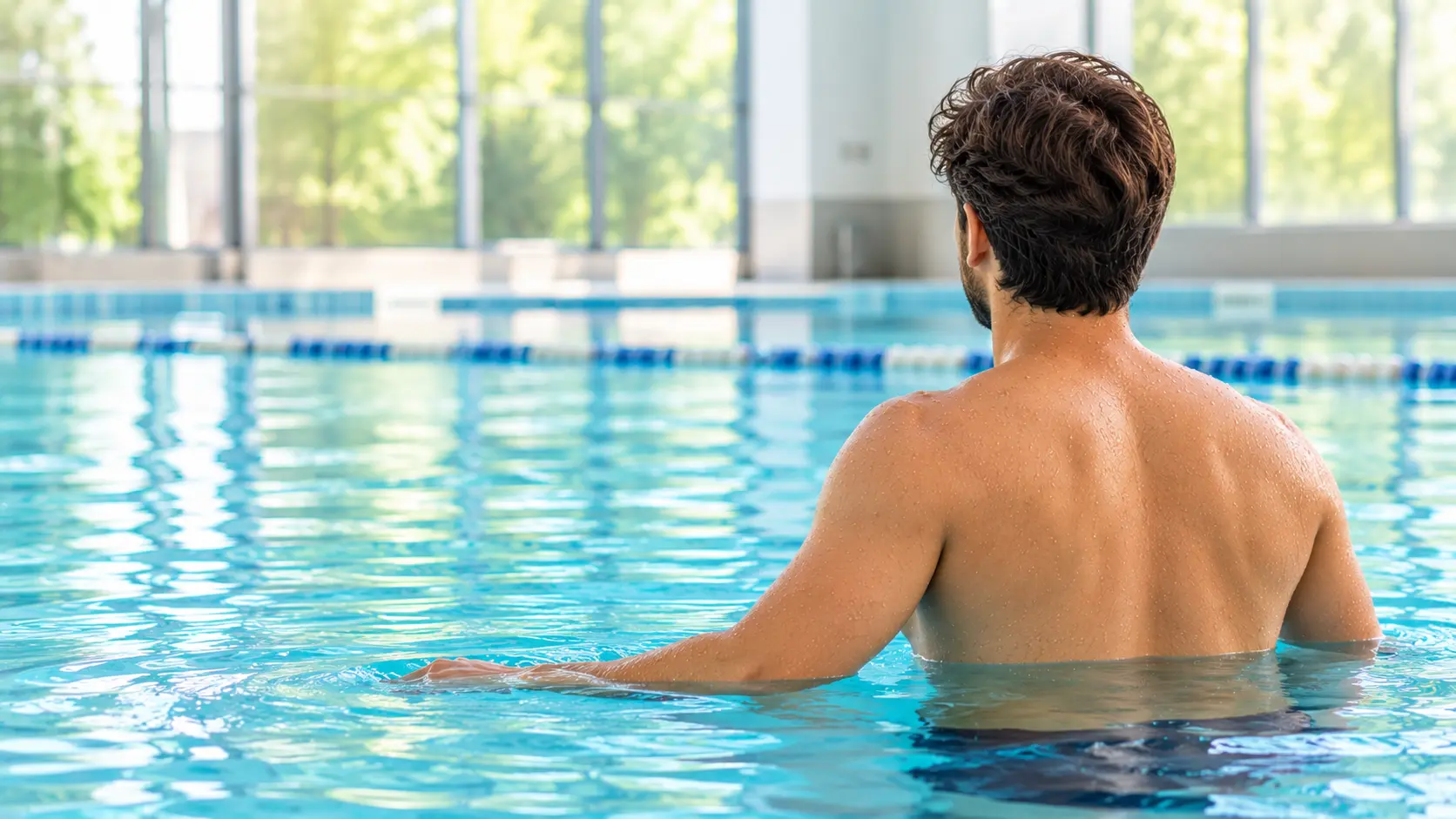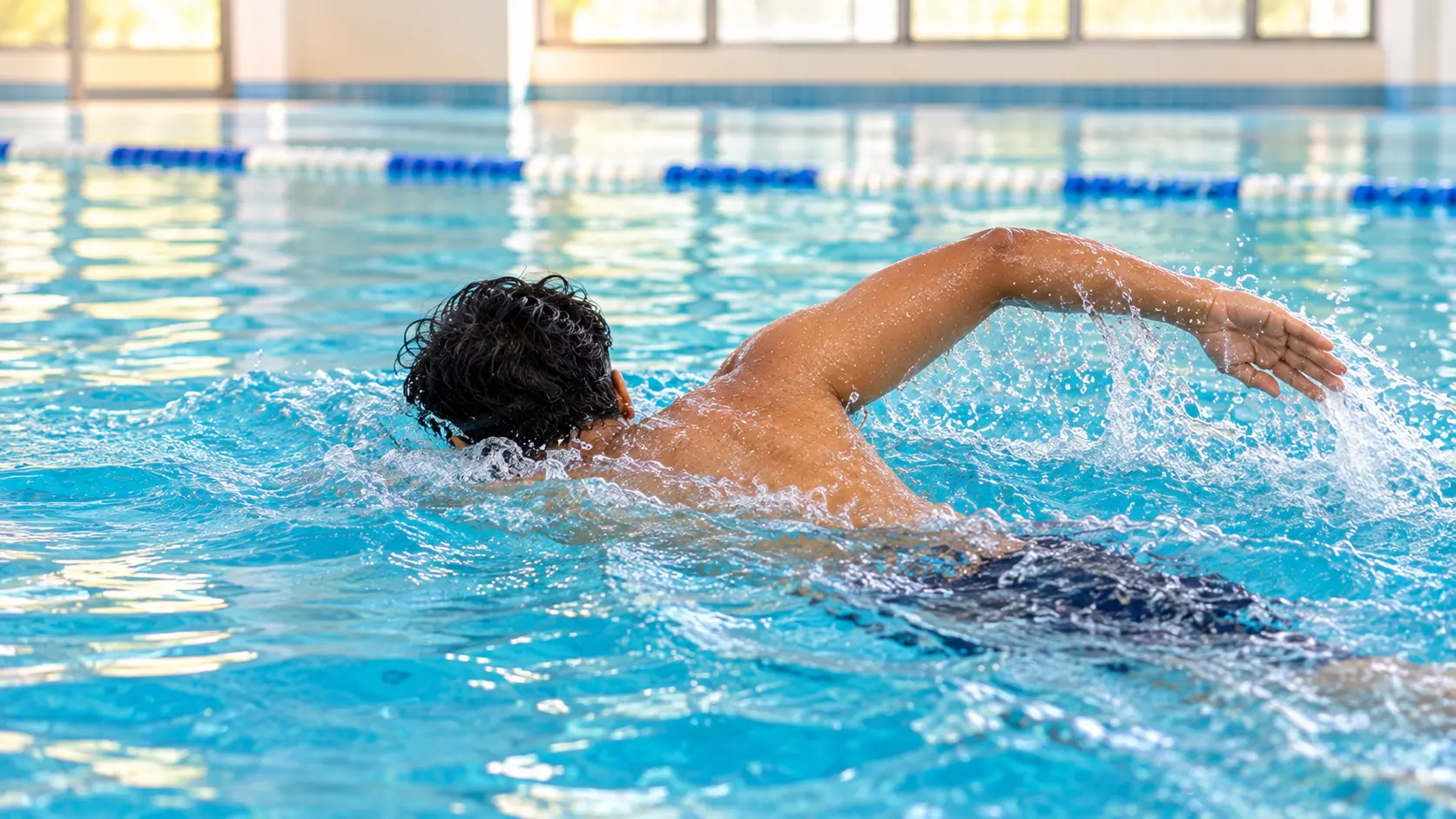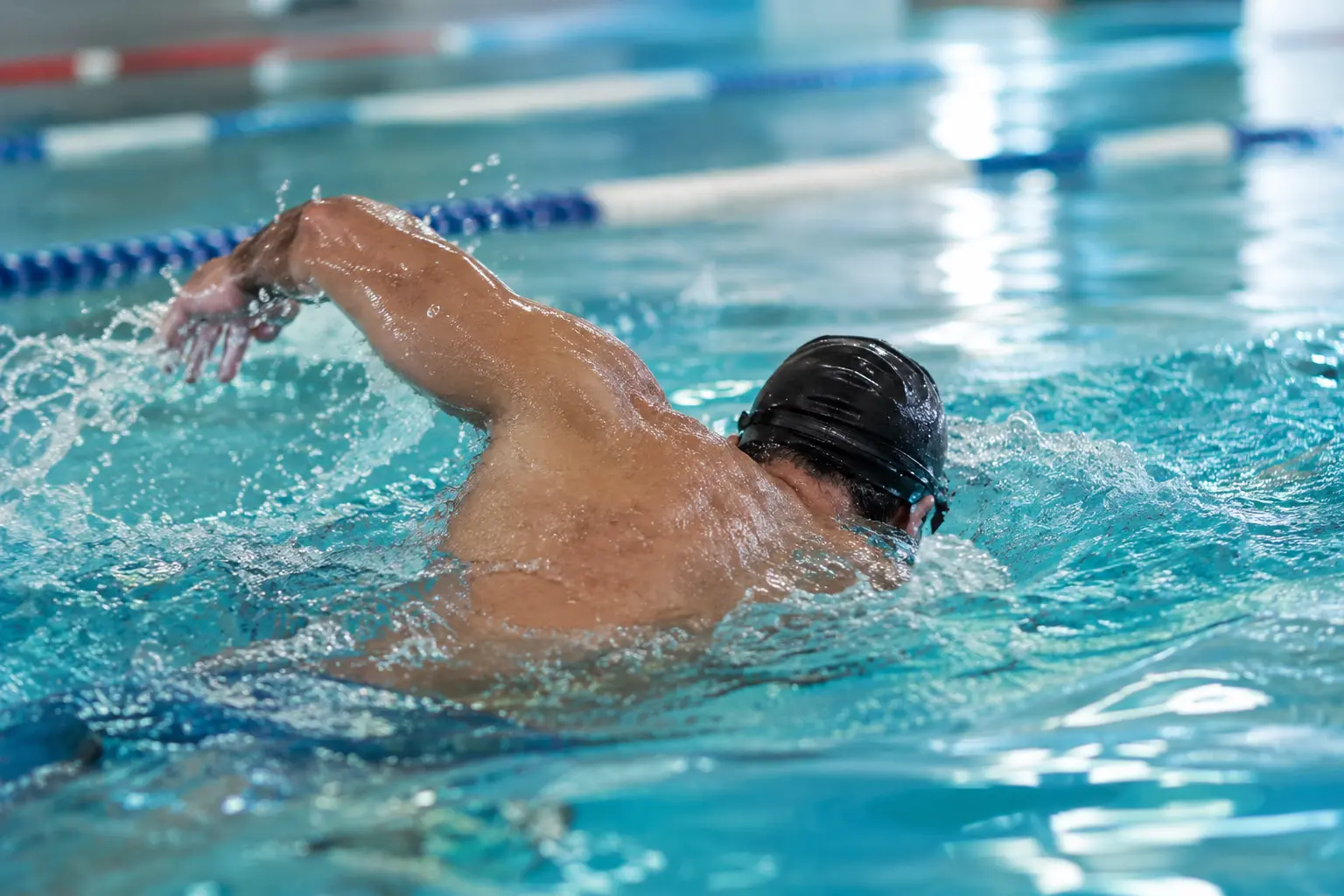
No, learning to swim as an adult isn’t hard. Trusting the water is.
Kicking, floating, and moving your arms through the water don’t ask much of your body. What they do ask a lot of is your nervous system, which has spent years getting very good at tensing up the moment something feels unstable.
Work through that part, and most people are surprised how quickly the rest falls into place.
So here’s the honest answer, from people who watch adults learn to swim every week.
Key takeaways
- Is it hard to learn to swim as an adult? Not physically. The movements themselves aren’t difficult. The real challenge is learning to trust and relax in the water, which is a confidence issue, not a fitness one.
- Can adults learn to swim at any age? Yes. There’s no cut-off point where the body stops being able to pick it up. Most beginners are comfortable within a handful of lessons.
- How hard is it compared to learning as a child? It roughly balances out. Adults have more fear to manage, but they learn faster because they understand why a technique works, not just how to copy it.
- What’s the best way to get over a fear of water? Go gradually: shallow water first, then face in the water, then floating with support. Each step builds trust rather than forcing it.
- Is it ever too late? No. Adults in their 40s, 50s, 60s and beyond have learned to swim as complete beginners. Age affects pace, not ability.
Can adults actually learn to swim?
Yes, and there’s no age where your body stops being capable of it.
Adults are often better candidates than they give themselves credit for. You can follow instructions properly. You understand why a technique matters instead of just copying a shape. And nobody’s wandering off mid-lesson because a pool toy caught their eye three lanes over.
What adults aren’t better at is letting go of control. Children usually have less fear ingrained, not none, but they haven’t had decades of practice at it. Thirty-odd years of bracing against anything that feels unsteady adds up to a habit, and a good first lesson is built to undo exactly that.
Never put your face underwater before? That’s a completely normal starting point. Tried lessons years ago and gave up halfway through? Also fine, and more common than you’d think.
This comes from the same approach we set out in our full guide, Learn to Swim as an Adult: The Complete Guide, built from coaching nervous adult beginners week after week.
How hard is it compared to learning as a kid?
Honestly, the movements themselves aren’t the problem. A six-year-old can learn to kick and float, and so can you. The real difference is what’s happening underneath the technique:
| Factor | Adults | Children |
| Learning the physical movements | Just as capable, no real disadvantage | Just as capable |
| Fear and body instinct | Years of practice at tensing up when unsteady | Usually less ingrained |
| Understanding why a technique works | Can learn the reasoning, which speeds things up | Mostly copying shapes, not understanding them |
| Net result | More fear to manage, more brainpower to manage it with | Less fear, less conscious understanding |
So it roughly balances out: a different kind of effort on each side.
What catches people off guard is how quickly the hard part passes. The steepest bit of the curve is usually the first lesson or two. After that it eases off faster than most adults expect, and nobody tells you that beforehand.
How to get over a fear of water as an adult
This is the question underneath the question. You’re not really asking “is it hard?” You’re asking whether you’re going to feel stupid or, worse, properly panic. That’s a fair thing to worry about. Here’s what genuinely helps:
Go gradual, not all at once. There’s no prize for marching into the deep end on day one, and it usually backfires. Stand comfortably in shallow water, then get your face wet, then float with support. Each step should feel only slightly uncomfortable. If a step feels like far more than that, it probably is, and that’s useful information, not a failure.
Understand why your body is reacting. “Just relax” is one of the least helpful things anyone can say to a nervous swimmer. What helps is knowing the tension is your body not yet trusting the water to hold it, and that trust builds through repetition, not gritted teeth.
Say the fear out loud before you get in. Telling a coach “I think I’ll panic once it gets deep” or “I had a bad experience with water years ago” reshapes the whole lesson around you. Keep it to yourself and you spend half the session managing a feeling nobody else knows is there.
Ask yourself what the worst case actually is. In a shallow pool, with someone watching you the entire time, what’s the real worst outcome? Most people find the fear shrinks once they answer that honestly.
Is it too late to learn to swim at 40, 50 or beyond?
No. If anything, we’d push back harder on this one. We’ve coached people into their 60s and 70s who started from scratch, and age barely registers once lessons are underway.
Age doesn’t affect your ability to learn. It might affect your joints a little, or your general fitness, but neither rules out swimming. They just mean a coach paces things differently. That’s a coaching adjustment, not a reason to stay out of the pool.
The real obstacle at 40 or 50 usually isn’t physical at all. It’s a story: everyone else sorted this out years ago, I’ve left it too long, people will stare. None of that holds up in a pool full of adult beginners, which is very different from the one most people picture before they walk in.
Does learning to swim in London make it easier or harder?
It could go either way, and the specific pool matters more than people expect.
A crowded, cold municipal pool with a children’s class splashing in the next lane makes things harder across the board: more self-consciousness, less coach attention, more reasons to feel out of place. None of that is about you. It’s the environment working against you.
A warm, adults-only pool removes most of that before the lesson even starts. Not because water behaves differently, but because you’re not bracing against the cold, and your attention isn’t split between your own nerves and a group of eight-year-olds doing butterfly beside you.
So London itself doesn’t make this harder. A lot of its pools do, simply by being busy, shared and public.
How Hydroverse makes this easier for nervous adult beginners
Everything above is true wherever you learn. Here’s what’s different at Kew Gardens and East Sheen.
- A warm pool, not a cold one. Our pool at Kew Gardens runs at 31°C [confirm East Sheen], and that matters more than it sounds. Cold water keeps your body tense before you’ve even started trying to relax it.
- Standing depth, wherever you are. Both pools are 1.2m deep end to end, so you can stand up anywhere. For a nervous adult beginner, that one fact often does more for a confident first week than any drill we could run.
- No children’s classes splashing through your lesson. We only coach adults. There’s no shared pool with a children’s group mid-session and no sense of being the odd one out, just adults working through the same thing you are.
- No competing for your coach’s attention. With a dedicated adults-only session, you’re not one of a dozen swimmers fighting for a few seconds of feedback. The focus stays on you.
Book your first lesson at Kew Gardens or East Sheen. One session will tell you more about how hard this is for you than any article, this one included.
Frequently asked questions
1) Can you learn to swim as an adult with no experience at all?
Yes. Most adult beginners start from exactly that point: no swimming experience, and sometimes not even comfortable putting their face in the water. It’s the normal starting line, not an exception.
2) Can I learn to swim as an adult if I’m not fit or I’m carrying extra weight?
Yes. Lessons adapt to your fitness level, and water genuinely supports body weight, which makes several movements easier than their equivalents on land.
3) How hard is it to learn to swim as an adult compared to other new skills?
Roughly similar to learning to ski or ride a bike later in life: a mix of coordination and trusting your own body. Not uniquely hard, just unfamiliar.
4) Is it harder to learn to swim after a bad experience with water as a child?
It can take a little longer emotionally, but it doesn’t change whether you’re capable of learning. A good instructor treats that history carefully rather than rushing past it.
5) Do I need to be fit before I start swimming lessons?
No. Fitness builds through the swimming itself. You don’t need to arrive with it.